
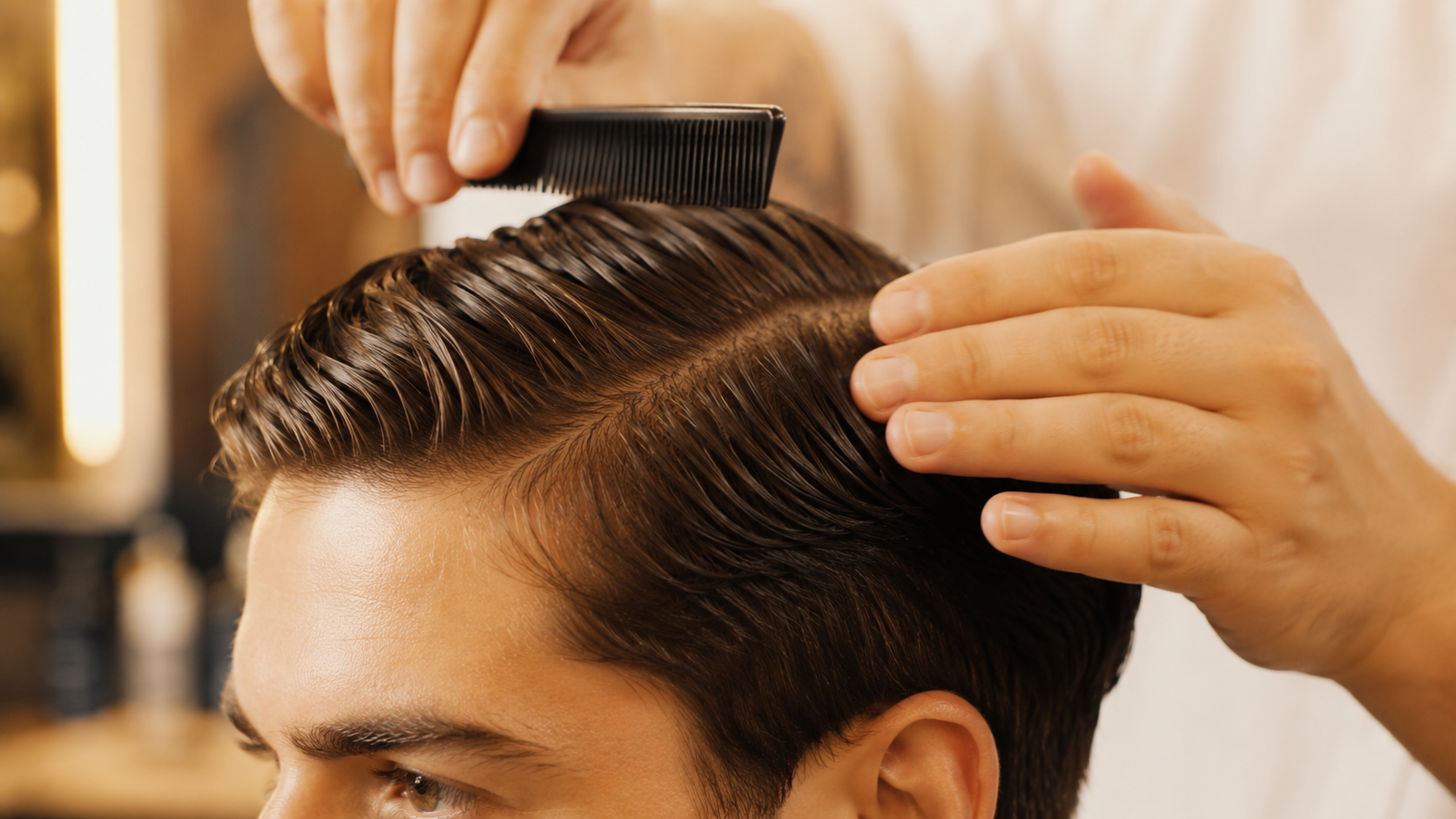
There is a conversation happening in professional grooming that most men never get to hear. It happens between a barber’s first glance at a client’s head and the moment the first cut is made. It is not about which style to choose or how short to go on the sides. It is about what is happening at scalp level, and whether the hair sitting on top of it is in any condition to be shaped properly. Scalp health is the foundation of every great haircut, and ignoring it is one of the most common reasons a fresh cut looks flat, uneven, or loses its shape within days.
Why the Scalp Matters More Than Most Men Think
Hair does not grow in isolation. Every strand emerges from a follicle embedded in the scalp, and the condition of that scalp directly influences how hair behaves, how it sits, and how it responds to cutting and styling. A scalp that carries excess sebum, product buildup, or dry skin creates an uneven canvas. Hair that grows from a congested or irritated scalp tends to lie differently in different zones of the head, making clean lines harder to execute and causing styles to collapse faster than they should.
Professional barbers notice the scalp before they notice the hair. The texture, the density, the way strands cluster or spread, the presence of dry patches near the temples or neckline — all of this information shapes decisions about angle, technique, and finish. When a client arrives with a well-maintained scalp, the difference in the final result is visible. The cut sits cleaner, the lines are sharper, and the style retains its integrity for longer.
The Connection Between Scalp Condition and Hair Texture
One of the less discussed consequences of poor scalp care is its effect on hair texture. When follicles are partially blocked by buildup or inflamed by dryness, the hair that grows from them can appear coarser, more brittle, or inconsistently thick across the head. This kind of textural variation complicates precision work. A barber working on fades, tapers, or any style that depends on smooth gradients needs hair that behaves consistently from one zone to the next.
Sebum, which the scalp produces naturally, is not the enemy. In the right amounts it keeps hair moisturised and gives it a natural sheen. The problem is accumulation, particularly when it mixes with styling products that are not fully washed out between sessions. This combination can alter how hair clusters at the root, creating the appearance of thinning in some areas and unwanted volume in others. A clean, balanced scalp produces hair that behaves more predictably, which is exactly what you want when sitting in the chair.
What to Do in the Days Before a Haircut
The preparation window is not just the morning of the appointment. Scalp condition is built over days, and a few consistent habits in the 48 to 72 hours before a cut can make a meaningful difference.
Start with a clarifying wash at least one day before. Unlike everyday shampoos, clarifying formulas are designed to break down product residue and excess oil at the scalp level without stripping the skin of all its natural moisture. This gives follicles room to breathe and allows the hair to settle into its natural pattern, which helps the barber assess true density and texture rather than what buildup is masking.
Gentle scalp massage during washing is worth the extra two minutes. Using fingertips, not nails, to work in circular motions across the entire scalp increases circulation, loosens any flaking skin, and encourages the natural oils to distribute more evenly along the hair shaft. It is a simple habit with compounding returns over time.
Avoid heavy styling products on the day of the appointment. Waxes, clays, and pomades that have not been fully removed create drag and resistance during cutting, which can affect the precision of the lines. Arriving with clean, product-free hair is one of the most courteous and practical things a client can do. It respects the barber’s craft and guarantees a better outcome for the client.
Hydration, Diet, and What Shows Up on Your Head
Scalp health is also an inside job. The skin on the head responds to the same internal signals as the skin on the rest of the body. Chronic dehydration shows up as a dull, flaky scalp. A diet low in healthy fats can reduce the natural lubrication of the follicle environment. Stress, which elevates cortisol levels, is one of the most documented contributors to temporary hair thinning and scalp sensitivity.
None of this requires a dramatic lifestyle overhaul. Drinking enough water, including omega-3-rich foods in the diet, and managing stress through whatever method works for the individual are changes that accumulate quietly and show up visibly over time. The scalp is a long-term investment, not a quick fix. Men who treat it consistently find that their hair becomes more manageable, their styles last longer, and their time in the barber’s chair produces results that hold up in real life.
How a Mobile Barber Approaches Scalp Assessment
Working in a home environment rather than a traditional shop changes how a barber reads a client. There are no other appointments crowding the space, no background noise pulling attention, and no artificial rush. A mobile barber has the time and focus to actually look at the scalp, ask about recent products, and adjust the approach based on what is genuinely there rather than what a rushed glance suggests.
This is one of the reasons the mobile barbering model has attracted clients who care seriously about the quality of their grooming. The experience is built around individual attention from start to finish. At markmalota.com, the approach to every appointment includes that kind of careful assessment, treating the scalp as the starting point rather than an afterthought. The cut is the result of everything that comes before it.
After the Cut: Keeping the Scalp in Shape
The work does not end when the appointment does. The days after a haircut are when the scalp is most visible and most vulnerable to the environmental factors that affect condition over time. Sun exposure on freshly cut areas, particularly around the temples and neckline, can dry out the skin quickly. A lightweight, non-comedogenic scalp moisturiser applied to exposed areas helps maintain the skin barrier without clogging follicles or weighing down the hair.
Returning to regular washing patterns within 24 to 48 hours after a cut keeps the environment clean without disrupting the fresh lines. Many men make the mistake of avoiding washing entirely for the first few days in an attempt to preserve the style, but this can allow sweat and oil to accumulate rapidly in the newly exposed areas, leading to the exact buildup that undermines the next appointment.
Great hair is a system, not a single event. The cut is the most visible moment in that system, but everything surrounding it, before and after, determines how long that moment actually lasts and how consistently it can be recreated.