
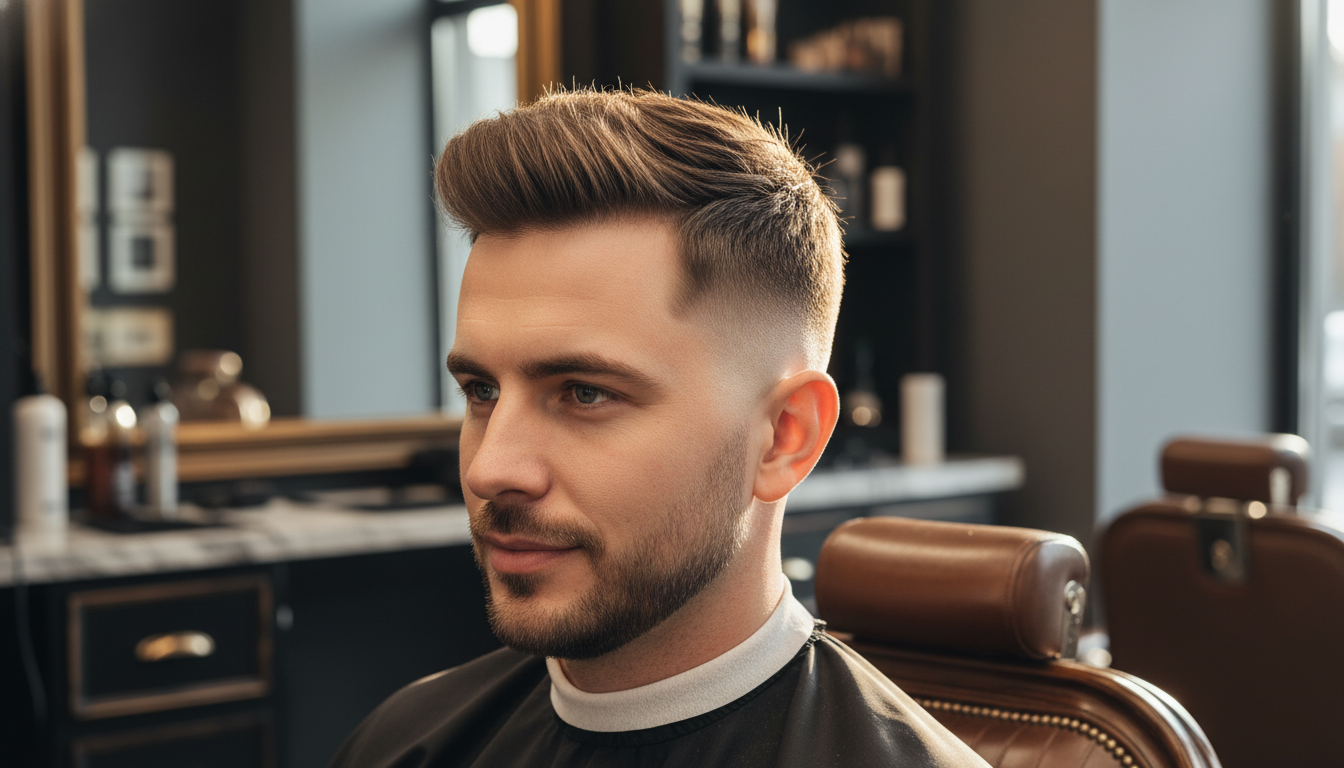
What Is a Fade Haircut, Exactly?
A fade is a barbering technique where the hair gradually transitions from a longer length on top to shorter sides and back, eventually blending into the skin or a very short length at the neckline and temples. The key word is gradual. The absence of a hard line is what makes a fade feel refined rather than abrupt. Clippers, blade guards of varying lengths, and a significant amount of freehand technique are all involved in achieving that seamless gradient.
The fade itself is not a haircut style on its own. It is a finish applied to the sides and back that can be combined with virtually any top style, from textured crops and pompadours to buzz cuts and longer, slicked back looks. This versatility is a large part of why it has remained dominant in men’s grooming for over a decade.
The Main Types of Fade and How They Differ
The terminology around fades can be confusing if you have not spent much time in a proper barbershop. The names refer primarily to where on the head the fade begins and how aggressively the hair drops to skin level.
A low fade starts just above the ear and the neckline, keeping the transition subtle and close to the natural hairline. It is the most conservative option, works well in formal or corporate environments, and tends to be the most forgiving for different head shapes. A mid fade begins roughly at the temple, offering a more defined contrast between the sides and the top without being too dramatic. It is the most popular choice for everyday wear because it balances versatility with visual interest.
A high fade starts much further up the sides of the head, sometimes just below the crown, creating a bold and striking contrast. This is a strong stylistic statement and requires a confident approach to personal style. A skin fade, also called a bald fade, takes the sides completely down to bare skin, producing the sharpest possible gradient. It is frequently combined with textured or curly tops and has a strong association with contemporary street and athletic aesthetics. Finally, a temple fade (sometimes called a Brooklyn fade) focuses the blend specifically around the temples and hairline, without taking the sides very high, making it ideal for men who want a cleaner shape without a dramatic length drop.
Choosing the Right Fade for Your Face Shape
No fade works equally well on every face shape, and this is where a skilled barber becomes genuinely valuable. The mechanics of the cut interact directly with facial geometry, and understanding this relationship helps you make a much better choice.
Men with oval faces have the most flexibility and can carry virtually any fade type well. Those with round faces generally benefit from a high fade combined with added volume or height on top, since this elongates the overall silhouette and creates the illusion of a longer face. For square faces, a low or mid fade tends to work better because it softens the strong angular jawline rather than emphasizing it further. Diamond and heart shaped faces often suit mid fades best, as they balance the width at the temples without adding too much visual weight to the lower half of the face.
Hair texture plays an equally important role. Coarser or curlier hair holds a fade beautifully and tends to show the gradient with impressive definition. Fine or straight hair can be trickier because the transition from longer to shorter can look less gradual without precise clipper work. This is precisely why choosing a barber with genuine technical experience matters far more than simply finding someone convenient.
How to Maintain a Fade Between Appointments
One of the honest truths about fade haircuts is that they require more frequent upkeep than most other styles. The cleaner and sharper the fade, the faster it visually grows out. A skin or high fade can start to lose its sharpness within two to three weeks, while a low fade on naturally dark hair can hold its shape slightly longer before looking overgrown.
Between professional appointments, there are a few things you can do to extend the life of your cut. Using a quality styling product suited to your hair type helps control the top and keeps the overall shape looking intentional rather than grown out. Keeping the hairline around the neck and ears clean with a trimmer at home, if you are comfortable doing so, also makes a noticeable difference in how polished the cut looks. Moisturizing your scalp, particularly if you have a skin fade, reduces the appearance of dryness or irritation that can make a fresh cut look less clean.
Most barbers who work with fades regularly will tell you that booking every three to four weeks is the sweet spot for keeping a mid or high fade looking its best. For low fades on darker hair, you can often push to five or six weeks before the shape becomes distracting.
The Fade as a Foundation, Not Just a Style
What makes the fade genuinely different from most haircut trends is that it functions as a structural foundation rather than a self-contained look. The same mid fade can underpin a classic side part just as effectively as it can support a modern textured quiff or a tightly coiled Afro shape on top. This adaptability means the fade grows with you across different life stages, dress codes, and aesthetic preferences without ever feeling out of place.
It also means that communication with your barber is especially important. Knowing which type of fade you want, how high you want the blend to sit, whether you prefer skin or a short guard at the base, and what you are doing with the top are all essential pieces of information for anyone cutting your hair. A barber who asks these questions before picking up the clippers is a barber worth returning to.
Getting a Fade in Marbella: What to Look For
The Costa del Sol has attracted a cosmopolitan, style-conscious clientele for decades, and the standard of grooming here reflects that. Men in Marbella tend to gravitate toward clean, well-maintained looks that work both at the beach and at a dinner reservation on the same evening. The fade fits that lifestyle perfectly, offering a cut that looks effortless in casual settings and sharp enough for anything more formal.
When choosing who cuts your hair, prioritize technical skill and portfolio over proximity or price. A fade done poorly is one of the most noticeable barbering mistakes because the whole point of the style is precision. Look for someone with demonstrable experience in clipper work, ideally with a background in professional training rather than self-taught practice. Mark Malota, trained at Toni&Guy London and a former Art Director within the company, brings that level of technical foundation to every appointment, whether in salon or at your home, villa, or hotel in Marbella and surrounding areas. You can explore his services and book directly at markmalota.com.
A great fade is not just about the forty minutes in the chair. It is about understanding your hair, your face, and your lifestyle well enough to make a cut work for you consistently over time. That understanding starts with asking the right questions, and it deepens with every visit to a barber who actually knows what they are doing.